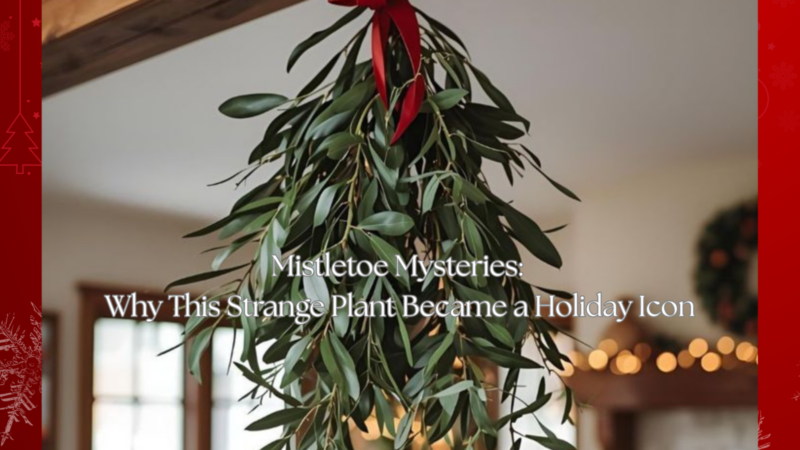
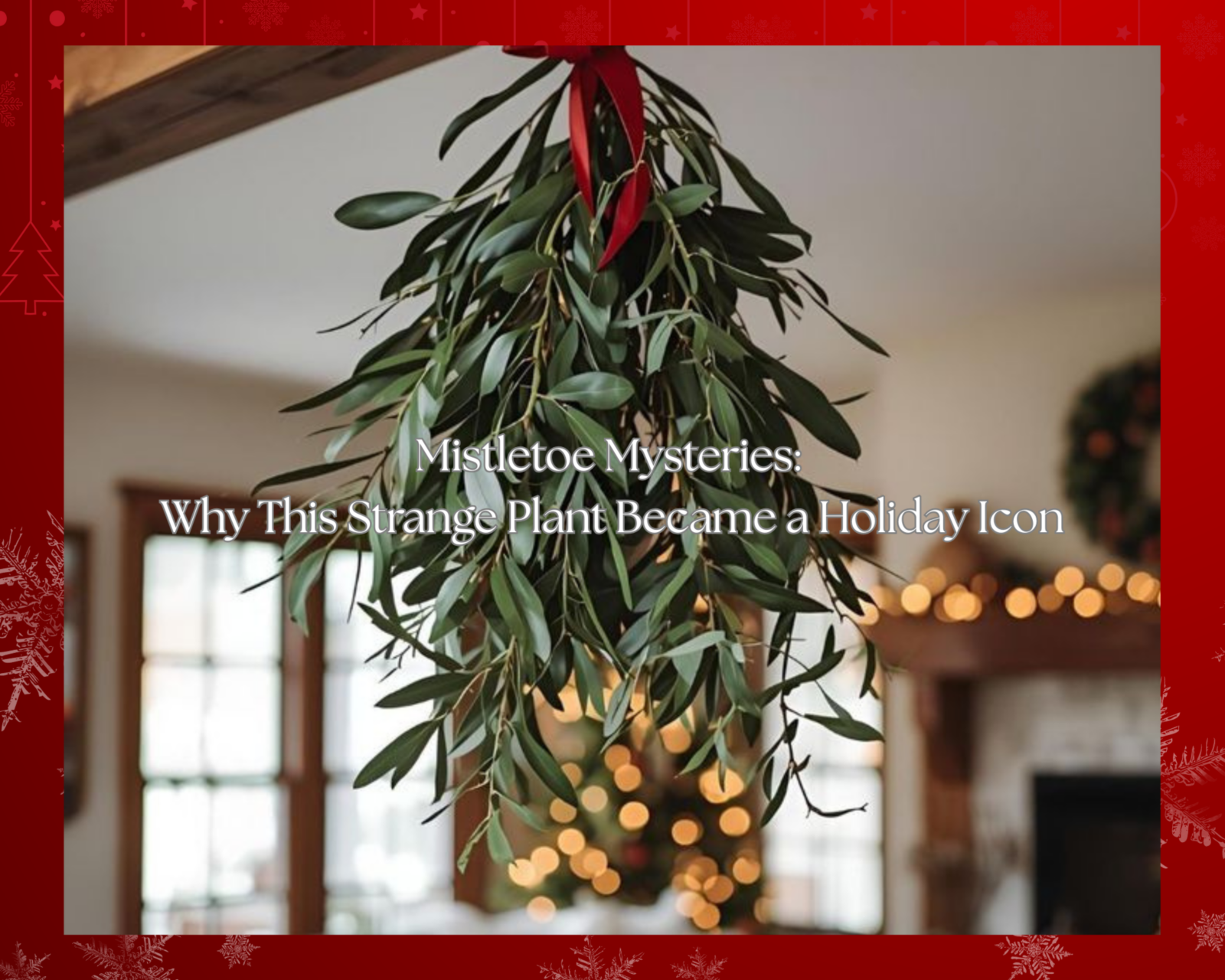
As the holiday season reaches its peak, a surprising piece of linguistic research has gone viral: the word mistletoe literally translates to “dung-on-a-twig.” Etymologists have traced the name back to two Old English words: mistel, meaning dung, and tan, meaning twig. This unromantic origin stems from the fact that the mistletoe plant is a hemiparasite that spreads via bird droppings. Ancient observers noticed that the plant almost always sprouted on tree branches where birds had previously perched and left their “contributions.” Though the etymology may be shocking, it’s worth remembering that humans have long associated mistletoe with much more enchanting ideas. For centuries, mistletoe has been a symbol of fertility, vitality, and peace. In Druidic traditions, the plant was revered as sacred, believed to hold protective and healing powers. Harvested with ceremonial precision, mistletoe was thought to bring luck, ward off evil spirits, and even cure certain illnesses. Its unusual ability to grow on trees without touching the ground likely contributed to its mystical reputation. The custom of kissing under mistletoe may seem strange—or even a little gross—given the literal meaning of its name. Yet this practice dates back hundreds of years, and historians believe it originated in Scandinavia. Ancient Norse legends described mistletoe as a symbol of love and reconciliation. By the 18th century, it had become a popular festive tradition in England, where couples would steal a kiss beneath the hanging plant as a gesture of goodwill and romantic promise. The juxtaposition of “dung-on-a-twig” with love and merriment has not gone unnoticed, and in the age of social media, it has sparked memes, tweets, and a flurry of holiday humor.Mistletoe’s unusual biology also adds to its intrigue. As a hemiparasite, it draws water and nutrients from host trees but also conducts its own photosynthesis, making it both dependent and independent. Its sticky white berries, which aid in dispersal, are also toxic to humans if ingested—a reminder that even festive flora can have a dark side. Ornithologists have noted that birds are key to the plant’s survival, often depositing seeds far from the parent tree, which explains how mistletoe has managed to thrive across Europe and North America.For those interested in exploring more about this unusual plant, the Royal Botanic Gardens, Kew, offers extensive archives on the history, biology, and cultural significance of mistletoe. From ancient Druidic rituals to modern-day holiday decor, the plant’s journey is a fascinating mix of myth, science, and quirky tradition. So, as you hang your sprigs of mistletoe this holiday season, take a moment to appreciate the strange, sometimes gross, but undeniably fascinating story behind it. Whether it’s sparking romance, inspiring folklore, or simply giving you a chuckle, “dung-on-a-twig” remains one of the most enduring symbols of festive cheer. #MistletoeHistory #HolidayTrivia #GrossButTrue #FunFacts #FestiveFlora #BotanyLovers #HolidayTraditions #KissingUnderMistletoe #ScienceMeetsTradition #PlantLovers