As layoffs continue to rise across industries, workers and businesses alike are confronting one of the most turbulent labor and economic environments in more than a decade. Economists describe the U.S. job market as being in a prolonged “no-hire, no-fire” limbo, where companies are freezing recruitment while cautiously managing costs amid persistent uncertainty. Job growth has slowed sharply, with only around 50,000 new jobs added last month, reflecting stagnation rather than recovery. At the same time, consumer confidence has fallen to its lowest level since 2014, squeezed by high interest rates, lingering inflation, and rising costs linked to new tariffs imposed under President Donald Trump’s trade policies. These pressures have not only stalled hiring but also accelerated layoffs, bankruptcies, and widespread store closures, reshaping employment prospects heading into 2026.
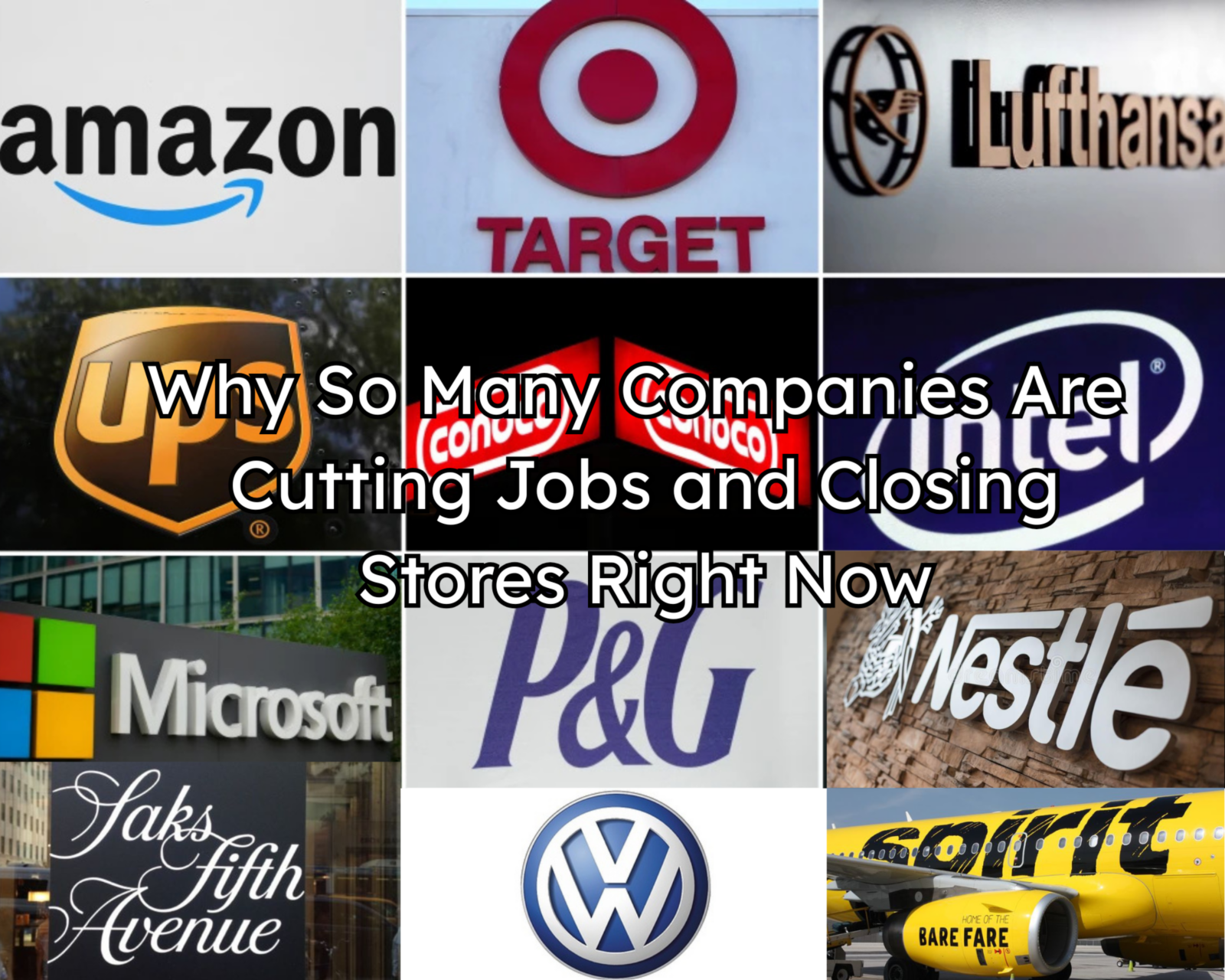
Across the private sector, companies are shedding jobs as they correct for aggressive pandemic-era hiring and shift spending toward automation, artificial intelligence, and efficiency-driven restructuring. Major corporations including Dow, Amazon, UPS, Tyson Foods, HP, Verizon, Nestlé, Novo Nordisk, Intel, Procter & Gamble, and Microsoft have announced tens of thousands of job cuts tied to cost controls, AI investment, and organizational simplification. Amazon alone has eliminated roughly 30,000 corporate roles across multiple rounds, while UPS plans to reduce up to 30,000 operational jobs as it scales back Amazon-related deliveries. Manufacturing and food production hubs have been particularly hard hit, with plant closures at Tyson Foods displacing thousands and deeply impacting small communities. These corporate decisions, while strategic, have intensified worker anxiety and increased competition for fewer available roles, especially as thousands of federal employees laid off last year also re-enter the labor market.
Parallel to the wave of layoffs is a sharp rise in bankruptcies and store closures that has swept through 2024 and 2025, with more planned through 2026. Retail has been at the center of what analysts call a “great reset,” as brick-and-mortar chains retreat in favor of e-commerce. Saks Global, which includes Saks Fifth Avenue and Neiman Marcus, filed for Chapter 11 bankruptcy in early 2026, shutting down its Saks Off 5th website and closing 57 outlet stores. Rite Aid, after two bankruptcy filings in two years, closed all of its more than 2,000 locations in late 2025. Forever 21 shuttered approximately 500 U.S. stores amid fierce competition from fast-fashion platforms like Shein and Temu, while Joann Fabrics closed over 800 stores following its second bankruptcy filing in a year. Macy’s is closing 150 stores through 2026, and both Walgreens and CVS are downsizing aggressively, together planning to shut more than 2,000 locations nationwide.
The automotive sector is facing its own crisis as it struggles with high costs and a difficult transition to electric vehicles. Volkswagen closed its Dresden plant in 2025—an unprecedented move in the company’s history—and announced thousands of job cuts in Germany. Stellantis missed profit forecasts amid financial strain, while suppliers such as Robert Bosch, ZF Friedrichshafen, and Aumovio collectively announced tens of thousands of layoffs. Ford cancelled its electric F-150 Lightning program and dissolved its BlueOval SK battery joint venture, placing roughly 1,500 jobs at risk.
Technology has experienced one of the most dramatic resets, with more than 1.1 million layoffs reported in the U.S. tech sector in 2025 alone. Intel announced a 15% workforce reduction, Microsoft cut roughly 15,000 jobs to fund AI infrastructure, Amazon continued corporate cuts into early 2026, and Salesforce eliminated thousands of customer support roles, replacing many functions with AI-driven systems. Meanwhile, food, travel, and hospitality companies have also struggled. Tupperware filed for bankruptcy in late 2024, Del Monte Foods sought Chapter 11 protection in 2025, Hooters restructured under bankruptcy protection, and Spirit Airlines filed for bankruptcy for the second time in August 2025.
Taken together, these developments reflect deep structural shifts driven by AI adoption, post-pandemic corrections, high debt burdens, elevated interest rates, and relentless competition from e-commerce. As businesses prioritize efficiency over expansion, workers face an increasingly uncertain and competitive employment landscape heading into 2026.
#Layoffs #Bankruptcies #JobMarket #EconomicUncertainty #RetailReset #AIandJobs #StoreClosures #TechLayoffs #EVTransition #CorporateRestructuring #BusinessNews #GlobalEconomy