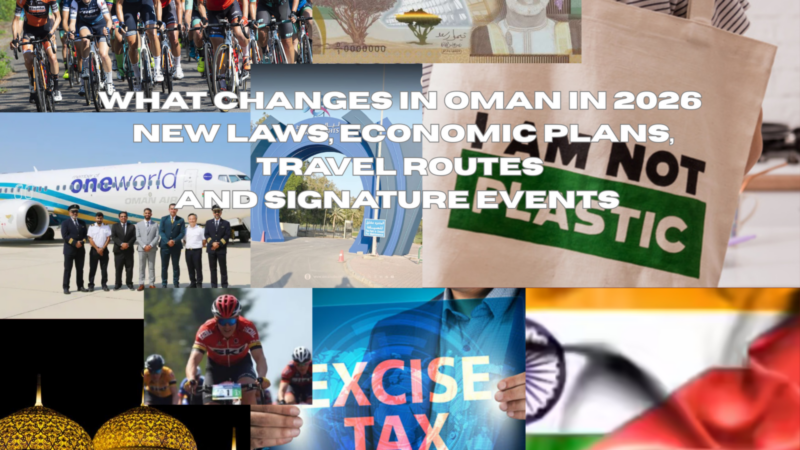
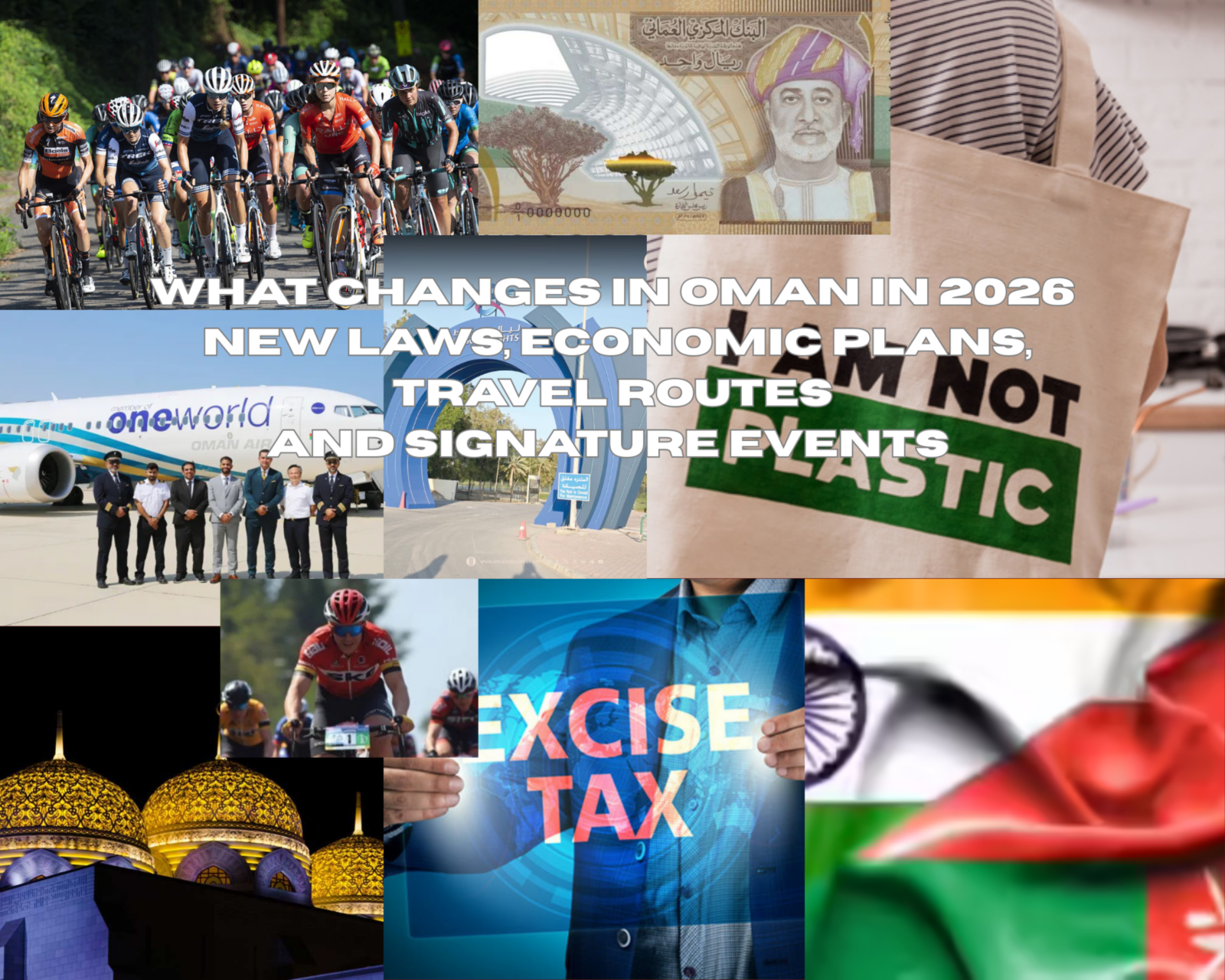
Starting January 2026, a wide-ranging set of policy changes and regulatory reforms has come into force across the Sultanate of Oman, marking a significant shift across multiple key sectors and directly impacting businesses, residents and government services as part of ongoing reforms aligned with Oman Vision 2040. These changes span economic, environmental, financial and lifestyle areas, beginning with the implementation of the fourth phase of the nationwide plastic shopping bag ban under Environment Authority Decision No. (2024/8), effective January 1, 2026, which aims to curb plastic pollution and promote sustainable consumption by extending the ban to a broad range of commercial activities including date vendors, drinking water and water pump sellers, automotive pump sales and repair shops, modern irrigation retailers, plant nurseries and agricultural supply stores, pet shops and sellers of birds, fish and related food products, construction and building material outlets, sellers of animal feed, grains, pesticides and agricultural chemicals, ice cream, corn, sweets and nut vendors, juice shops, traditional food stalls such as mashakeek vendors, as well as mills and honey sellers. At the same time, the government has announced the official national and religious public holiday calendar for 2026 in advance—excluding Eid Al-Fitr and Eid Al-Adha, which will be confirmed based on moon sighting declarations—in a move aimed at improving institutional and administrative planning efficiency, with confirmed holidays including Sultan’s Accession Day on Thursday, January 15, Al Isra’ wal Mi’raj on Sunday, January 18, the New Hijri Year on Thursday, June 18, the Prophet’s Birthday (PBUH) on Thursday, August 27, and National Day on Wednesday and Thursday, November 25 and 26, 2026. From January 1, 2026, stricter enforcement of excise tax regulations also takes effect, as the Tax Authority prohibits the sale or circulation of energy drinks and other excise products that do not carry the mandatory Digital Tax Stamp (DTS), extending enforcement to the local market following the earlier ban on importing unstamped products in June 2025, with the DTS system designed to ensure product authenticity, quality and safety, strengthen tax compliance, and combat illicit trade. Economically, Oman begins implementing its Eleventh Five-Year Development Plan (2026–2030) from January 2026, marking a major restructuring of the Sultanate’s national development strategy with a focus on building a diversified and sustainable economy, enhancing economic decentralisation across governorates, improving the efficiency of social development, and strengthening governance systems and institutional performance. The New Year also introduces Oman’s first OMR 1 polymer banknote, announced by the Central Bank of Oman, which will enter circulation on January 11, 2026, alongside the existing paper-based OMR 1 note as legal tender at face value, with a dedicated sales counter operated by Oman Post at Opera Galleria offering the polymer notes from the same date. On the international trade front, the Oman–India Comprehensive Economic Partnership Agreement (CEPA) opens new avenues for bilateral economic cooperation by granting Omani products preferential access to one of the world’s largest consumer markets, boosting national exports, strengthening Oman’s global trade footprint, reinforcing its position as a regional logistics and industrial hub and a strategic gateway to Asian markets, while also stimulating wider commercial exchange, deepening regional economic integration, and attracting foreign investment particularly in manufacturing, logistics, ports, renewable energy and downstream industries. In aviation, 2026 brings expanded international connectivity from Muscat International Airport, with Oman Air launching a new Muscat–Taif service starting January 31, 2026, operating three times weekly on Tuesdays, Thursdays and Saturdays using a Boeing 737 and becoming the airline’s fifth destination in Saudi Arabia alongside Jeddah, Riyadh, Dammam and Madinah, while Salam Air has announced Port Sudan as its newest destination with the Muscat–Port Sudan route commencing on January 27, 2026, also operating three flights per week. Socially, the third phase of the premarital medical examination comes into force in 2026 through a legislative framework mandating medical screening as a prerequisite for completing marriage procedures, reinforcing public health and preventive care objectives. Even as these regulatory and structural changes take effect, Muscat’s cultural and tourism calendar remains vibrant, with Muscat Nights 2026 returning throughout January as a flagship winter festival showcasing culture, entertainment and sport and offering residents and visitors an immersive display of the capital’s tourism and cultural diversity, followed by international attention from February 6 with the 15th edition of the Tour of Oman, a globally broadcast, world-class cycling race featuring a five-stage route starting February 7 and preceded by the Muscat Classic, a 179.165-kilometre race from Al Mouj to Al Bustan, highlighting Oman’s coastal scenery, mountainous terrain and rich heritage while reinforcing the Sultanate’s growing profile as a host of major cultural and sporting events as it confidently steps into 2026.
#Oman2026 #SultanateOfOman #OmanVision2040 #PolicyReforms #RegulatoryUpdates #PlasticBagBan #Sustainability #DigitalTaxStamp #ExciseTax #PublicHolidays #FiveYearPlan #EconomicDiversification #OMR1Polymer #CentralBankOfOman #OmanIndiaCEPA #TradeAndInvestment #MuscatInternationalAirport #OmanAir #SalamAir #NewFlightRoutes #PremaritalMedicalExam #PublicHealth #MuscatNights2026 #TourOfOman #CultureAndTourism #NationalDevelopment